Ankle Sprain: Treatment and Rehabilitation with Physiotherapy
Ankle sprain is the most common joint injury. Discover the grades, proper treatment and how to prevent recurrences.

Reviewed by Javier Fontanet Royo, physiotherapist & osteopath (registration no. 1042)
Updated

What is an ankle sprain?
An ankle sprain is an injury to the ligaments that stabilise the ankle joint, caused by a forced movement that exceeds the normal limits of the joint. It is the most common musculoskeletal injury, accounting for approximately 25% of all sports injuries.
The most common mechanism is forced inversion of the foot (twisting inward), which affects the lateral compartment ligaments, especially the anterior talofibular ligament. Sprains can occur during sports, walking on uneven ground, climbing stairs or simply from a misstep.
Grades of ankle sprain
Sprains are classified into three grades according to the severity of the ligament injury:
- Grade I (mild): Stretching of ligament fibres without tearing. Mild pain, minimal swelling and no joint instability. Recovery in 1-3 weeks.
- Grade II (moderate): Partial ligament tear. Moderate to severe pain, visible swelling and bruising, some instability. Recovery in 3-6 weeks.
- Grade III (severe): Complete ligament tear. Severe pain, significant swelling and bruising, marked instability and functional disability. Recovery in 6-12 weeks.
When should you see a doctor or go to A&E?
Most sprains do not need emergency care, but some signs mean a fracture or another injury has to be ruled out. They are essentially the ones covered by the Ottawa ankle rules, which doctors use to decide whether an X-ray is needed.
If you have none of these signs, the usual approach is to start with the acute-phase measures and have a physiotherapist or doctor assess the grade within the first few days.
- You cannot take four steps on the foot, either straight after the injury or later on
- Pressing on the bone is very painful: the back edge or tip of the ankle bones (malleoli), or the base of the fifth metatarsal on the outside of the foot
- The ankle looks deformed or something feels out of place
- Your foot is cold, pale, numb or tingling
- You heard a loud pop and the ankle feels very unstable
- The pain and swelling have not improved at all after 5-7 days
Grade 2 ankle sprain: what to expect week by week
A grade 2 sprain is the most common type we see, and it generally recovers in 3-6 weeks. These timeframes are a guide only: they depend on the injury, on how the ankle is loaded and on the activity you want to return to.
- Days 1-3: protection, ice, compression and elevation. Partial weight-bearing within what the pain allows, with crutches if needed.
- Weeks 1-2: the swelling starts to go down and walking gets steadily easier. We restore mobility, especially ankle flexion, and begin gentle strength work.
- Weeks 2-4: peroneal and calf strength, single-leg balance and an almost normal daily life. If you can walk briskly and hop on the injured foot without pain, you can try jogging on flat ground.
- Weeks 4-6 or longer: running, jumping and changes of direction. Return to sport is decided when the ankle performs like the healthy one, not just by how many weeks have passed.
Treatment in the acute phase
In the first 48-72 hours after the sprain, treatment focuses on controlling inflammation and protecting the injured tissues. The current protocol (POLICE: Protect, Optimal Loading, Ice, Compression, Elevation) has replaced the old RICE protocol, incorporating early optimal loading instead of absolute rest.
Cryotherapy (ice) applied for 15-20 minutes every 2-3 hours helps reduce swelling and pain. Compression with functional bandaging and limb elevation complete the initial measures. At Fontanet Medicina i Fisioterapia we assess the severity of the sprain to determine whether immobilisation is needed or whether early mobilisation can begin.
Rehabilitation with physiotherapy
Ankle sprain rehabilitation is essential for achieving a complete recovery and preventing dreaded recurrences. At our physiotherapy centre in Tarragona, we follow a progressive protocol that includes several phases.
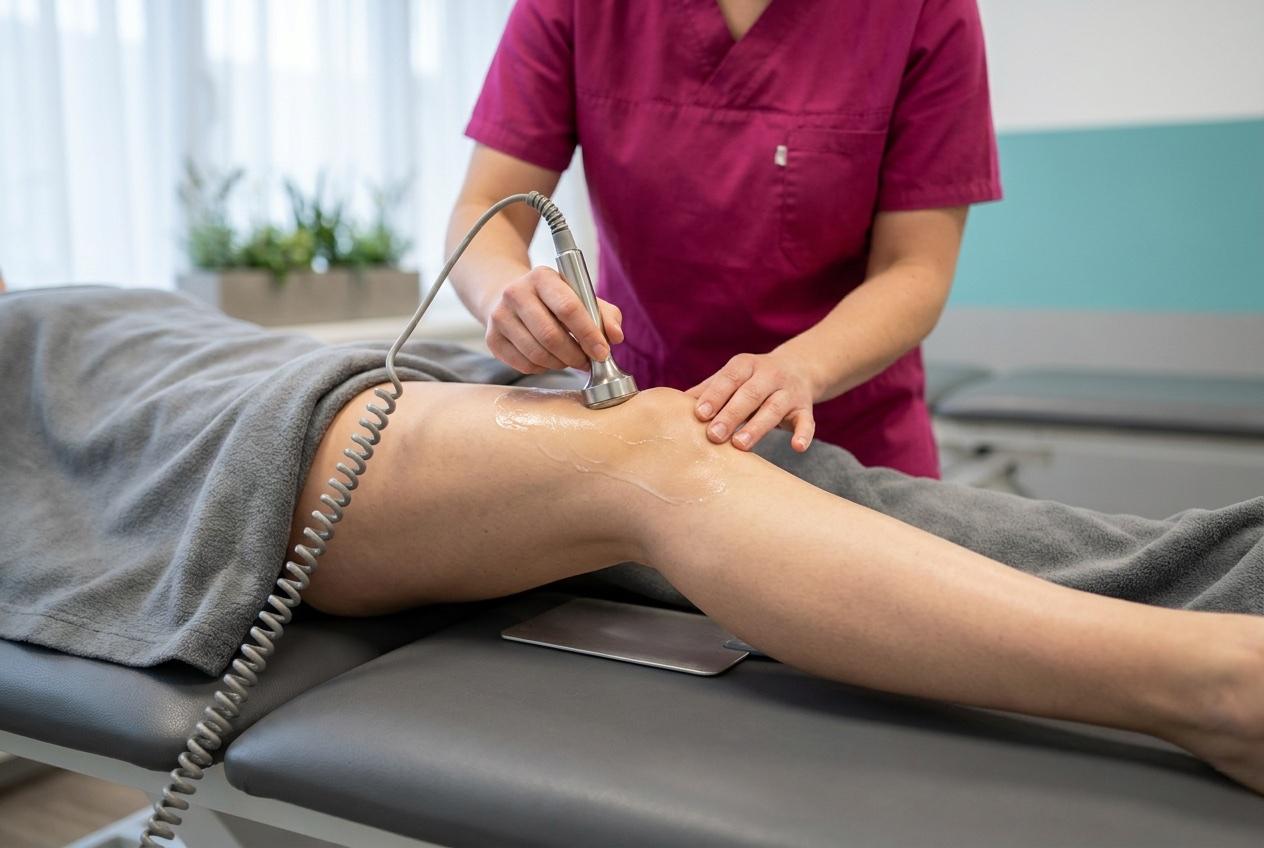
In the initial phase, we work on early joint mobilisation, oedema drainage through manual therapy and electrotherapy, and gentle isometric exercises. We progressively incorporate peroneal muscle strengthening exercises, proprioceptive work on unstable surfaces and functional training.
Proprioception is perhaps the most important aspect of rehabilitation. By working on balance using wobble boards, soft surfaces and with eyes closed, we retrain the ankle's protective mechanisms that are disrupted after a sprain.
- Manual therapy to restore full joint mobility
- Progressive strengthening exercises for ankle stabilisers
- Proprioceptive and balance work on unstable surfaces
- Functional taping or kinesiotaping during return to activity
- Plyometric training for athletes before return to competition
Prevention of recurrences
Ankle sprains recur very easily if they are not properly rehabilitated: the biggest risk factor for spraining an ankle is having sprained it before. It is therefore essential to complete the rehabilitation programme even when the pain has disappeared.
Daily proprioceptive work, the use of ankle braces during high-risk activities and the correction of muscular imbalances are the keys to preventing new episodes. If you practise sport, the return should be gradual and with the physiotherapist's approval.
A badly healed sprain: pain and instability that won't go away
Some people still have symptoms months after a sprain. The most common complaint is an ankle that gives way easily or feels unreliable, especially on uneven ground, which is known as chronic ankle instability.
It is almost always due to incomplete rehabilitation: a lack of strength, balance or mobility. That is why it is treated first with a specific physiotherapy programme, and only if the ankle keeps giving way after several months of well-done work is it assessed by sports medicine or orthopaedics, with imaging and, in some cases, surgery.
- The ankle rolls again with trivial movements
- Feeling insecure going down stairs or walking on rough ground
- Swelling that comes back after activity
- Pain at the front or outer side of the ankle that never quite clears