
Muscle Fibre Tear: Grades, Treatment and Recovery
A muscle fibre tear is a common injury in athletes. Learn about the grades, appropriate treatment and recovery times.
What is a muscle fibre tear?
A muscle fibre tear, also known as a muscle strain or pull, is the tearing of muscle fibres caused by a sudden contraction or excessive stretching of the muscle. It is one of the most common injuries in sports, especially in sports that require sprints, changes of direction or explosive movements.
The most commonly affected muscles are the hamstrings (back of the thigh), the calves, the rectus femoris of the quadriceps and the adductors. The injury typically occurs during running, jumping or kicking, at the moment when the muscle contracts while in a stretched position.
Grades of muscle fibre tear
Muscle fibre tears are classified into grades according to the extent of muscle damage:
- Grade I (mild - elongation): Tearing of few muscle fibres (<5% of the muscle). Localised pinching pain but allows continuation of activity. Recovery in 1-2 weeks.
- Grade II (moderate - partial tear): Significant fibre tearing (5-50% of the muscle). Severe pain, immediate functional impairment, visible bruising. Recovery in 3-8 weeks.
- Grade III (severe - complete tear): Total rupture of the muscle or a complete fascicle. Very severe pain, total functional impairment, palpable deformity. Recovery in 8-16 weeks, may require surgery.
Treatment in the acute phase (first 72 hours)
Immediate treatment following a muscle fibre tear is crucial for the prognosis. In the first 48-72 hours, we apply the PEACE & LOVE protocol, which has updated the older RICE and POLICE protocols.
PEACE (immediate phase): Protection of the area, Elevation of the limb, Anti-inflammatories avoid (do not interfere with natural inflammation), Compression with bandaging, Education about the injury. LOVE (subsequent phase): Optimal Loading that is progressive, Optimism (positive attitude), Vascularisation (gentle cardiovascular activity), Exercise (early mobilisation).
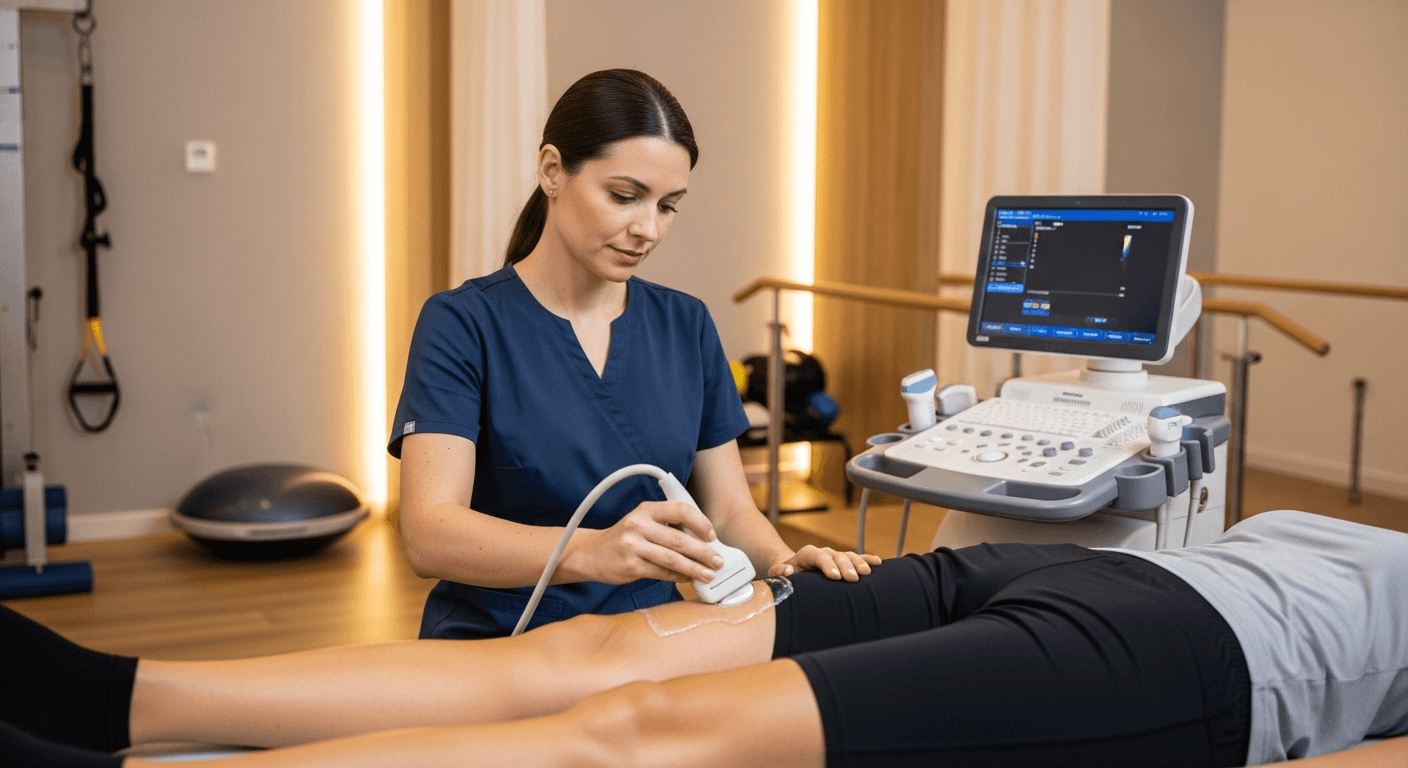
At Fontanet Medicina i Fisioterapia we perform a musculoskeletal ultrasound to assess the exact extent of the injury and establish a precise recovery prognosis.
Rehabilitation with physiotherapy
Muscle fibre tear rehabilitation follows a progressive protocol that respects the biological healing times of muscle tissue. At our centre in Tarragona, we personalise each protocol according to the grade of injury, the affected muscle and the patient's sporting demands.
In the first phase, we work on controlling oedema and pain with gentle manual therapy, electrotherapy and pain-free active mobilisation. We progressively incorporate isometric, concentric and finally eccentric exercises, which are fundamental for proper healing and orientation of the muscle fibres.
The final phases include plyometric work, speed exercises and sport-specific movement before giving the all-clear for return to sport. Skipping any of these phases is the main cause of recurrences.
- Haematoma drainage and oedema control
- Early mobilisation and pain-free isometric exercises
- Progressive concentric and eccentric strengthening
- Progressive stretching (avoid forcing in initial phases)
- Proprioceptive and stability work
- Sport-specific movement readaptation and return to training
Prevention of muscle fibre tears
Muscle fibre tears have a high recurrence rate (up to 30% in the first months after returning to sport). Prevention is based on proper warm-up, eccentric strength training of vulnerable muscles, adequate hydration and nutrition, and respecting rest periods between training sessions.
Prevention programmes with eccentric exercises such as the Nordic Hamstring exercise for hamstrings have been shown to significantly reduce the incidence of injuries in athletes. If you have suffered a muscle fibre tear, do not return to sport until the entire rehabilitation protocol is completed.