
Chondromalacia Patellae: Symptoms and Physiotherapy Treatment
Chondromalacia patellae causes pain at the front of the knee. Discover its causes, grades and the most effective physiotherapy treatment.
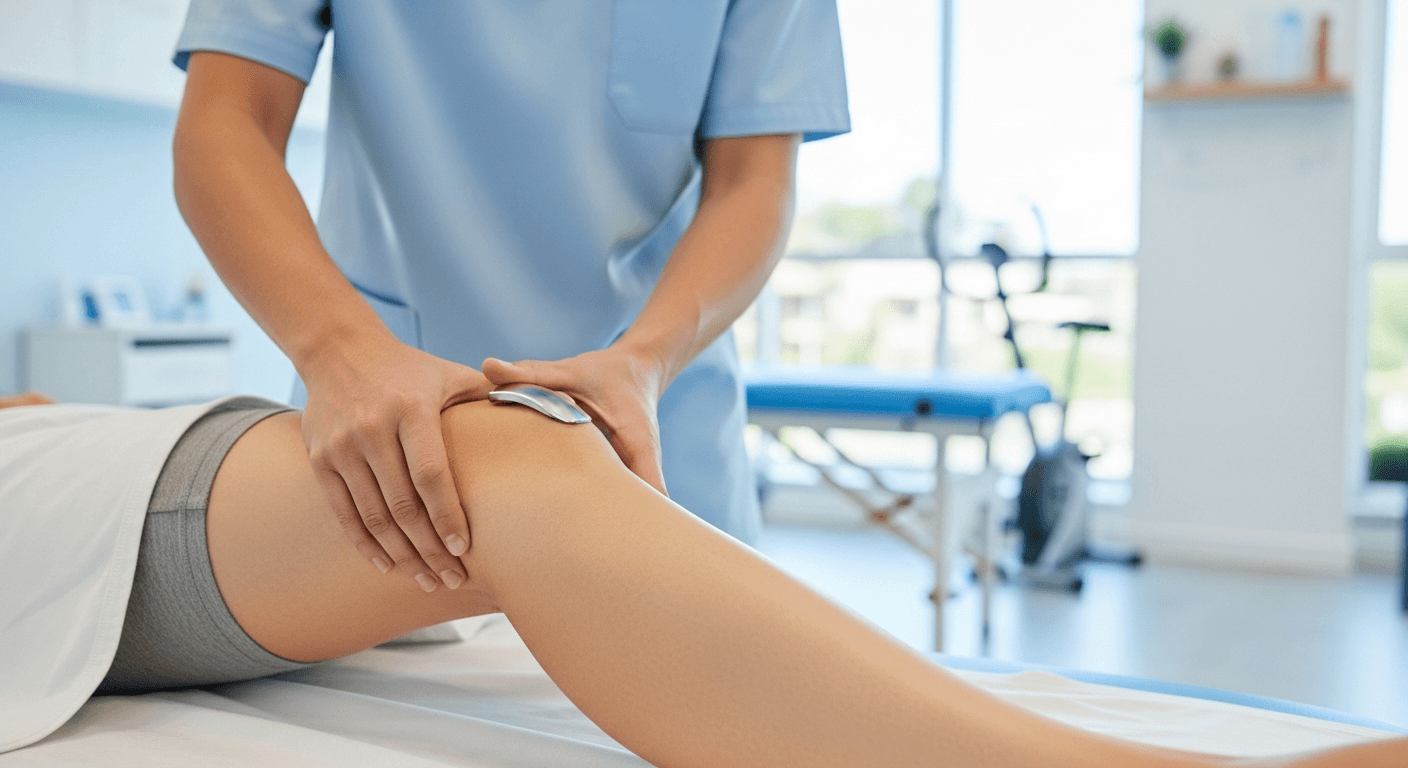
What is chondromalacia patellae?
Chondromalacia patellae is the softening and deterioration of the articular cartilage covering the posterior surface of the kneecap (patella). This cartilage allows the smooth gliding of the patella over the femur during knee flexion and extension movements.
When this cartilage deteriorates, it produces pain at the front of the knee, especially when going up and down stairs, sitting with the knees bent for a long time, or standing up after being seated. It is a very common condition in young people and athletes, being more prevalent in women.
Causes and risk factors
Chondromalacia patellae is caused by an imbalance in the forces acting on the patella during movement. The most common causes include:
- Patellar malalignment: the patella does not glide correctly in the femoral groove, causing uneven wear
- Muscular imbalance: weakness of the vastus medialis oblique (VMO) relative to the vastus lateralis, which pulls the patella outward
- Overload from impact sports: running, jumping, repetitive deep squats
- Biomechanical abnormalities: genu valgum, foot hyperpronation, excessive internal hip rotation
- Direct trauma to the patella (falls, impacts)
- Excess weight increasing pressure on the patellofemoral joint
Grades of chondromalacia patellae
Chondromalacia is classified into four grades according to cartilage involvement:
Grade I: Softening of the cartilage without visible damage. The cartilage loses its normal firmness but its surface remains intact.
Grade II: Superficial fibrillation of the cartilage. Cracks and irregularities appear on the surface but do not penetrate the full depth.
Grade III: Deep fissures reaching the subchondral bone. The cartilage fragments, forming flaps.
Grade IV: Exposure of the subchondral bone. Complete loss of cartilage in some areas, with direct bone-on-bone contact.
Grades I and II respond excellently to conservative treatment with physiotherapy. Grades III and IV may require additional measures but also benefit from physiotherapy treatment.
Physiotherapy treatment
The treatment of chondromalacia patellae at Fontanet Medicina i Fisioterapia focuses on correcting the factors that cause patellar overload. Targeted muscle strengthening is the foundation of treatment and the measure with the strongest scientific evidence.
Strengthening the quadriceps, particularly the vastus medialis oblique (VMO), improves patellar tracking and reduces pressure on the damaged areas of cartilage. Closed kinetic chain exercises within pain-free ranges of movement are the most recommended.
The approach is not limited to the knee: we strengthen the hip stabilisers (gluteus medius), work on posterior chain and quadriceps flexibility, and correct foot abnormalities with insole advice if necessary.
- Quadriceps strengthening (emphasis on VMO) and gluteus medius
- Closed kinetic chain exercises in pain-free arcs
- Stretching of quadriceps, hamstrings and iliotibial band
- Patellar kinesiotaping to improve tracking
- Patellofemoral joint manual therapy
- Biomechanical correction: footwear, insoles, sporting technique
Exercises and recommendations
Home exercises are fundamental to the success of treatment. Exercises such as the partial wall squat (wall sit), lateral step-up, straight leg raises and glute bridges form the cornerstone of the strengthening programme.
Temporarily avoid activities that cause severe pain (deep squats, running downhill, sitting with knees bent for long periods). It is not necessary to eliminate all activity: adapted exercise promotes cartilage nutrition and recovery.
At our centre in Tarragona, we design a personalised progressive programme that will allow you to return to your sporting activities without pain. Consistency is key: results are noticeable from 6-8 weeks of regular exercise.