
Muscle Contracture: Causes, Symptoms and Treatment in Tarragona
Muscle contracture is one of the most common ailments. Learn about its causes, how to identify it, and which physiotherapy treatments are most effective.
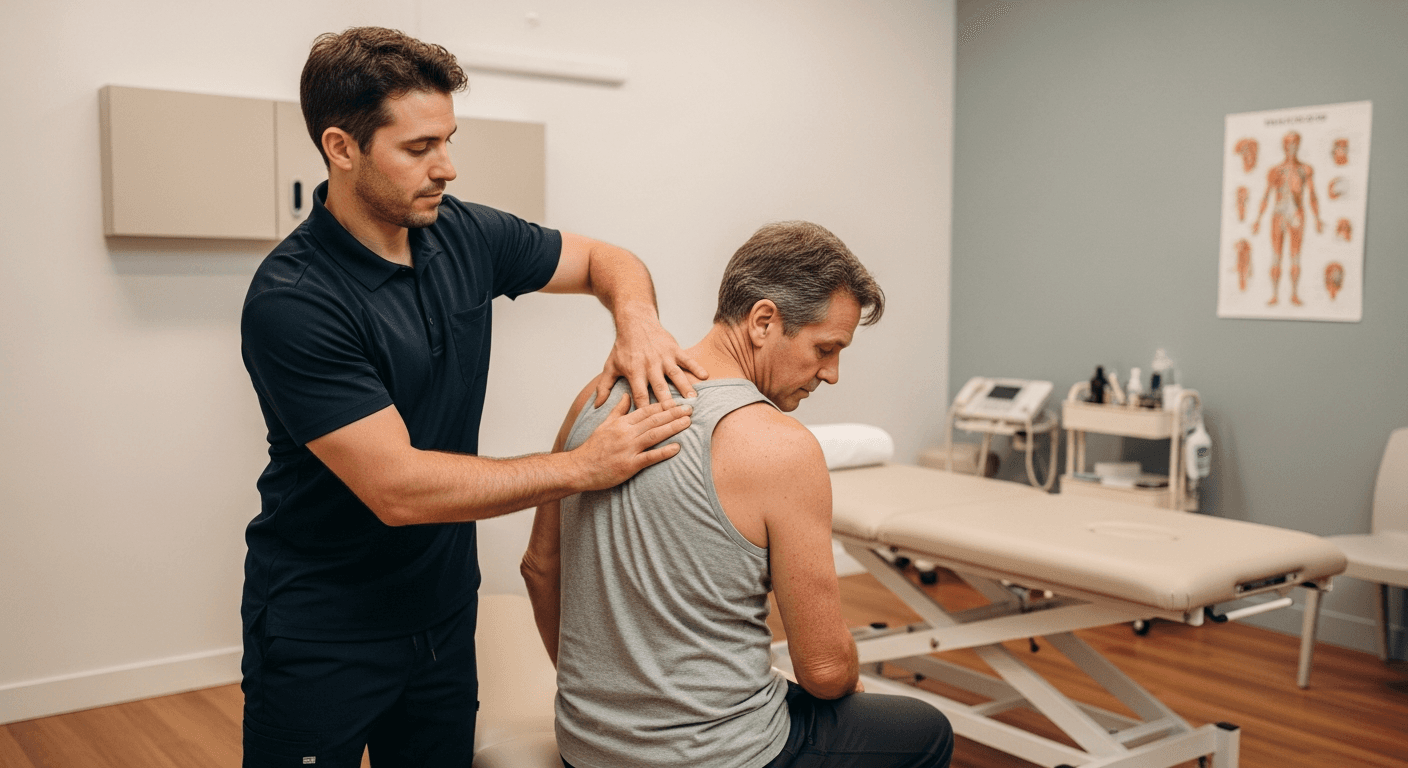
What is a muscle contracture?
A muscle contracture is an involuntary and persistent contraction of a muscle or muscle group that persists over time. Unlike a muscle spasm, which is brief and transient, a contracture remains for days or even weeks if not treated properly.
This type of injury frequently affects the cervical area, the trapezius, the lower back, and the calves. It is one of the most common reasons for consultation at our physiotherapy centre in Tarragona, as it can occur in both athletes and sedentary individuals.
Main causes of muscle contractures
Contractures can be caused by multiple factors, the most common being:
- Muscle overload from excessive or repetitive physical effort
- Poor posture maintained for long hours (office work, driving)
- Stress and emotional tension causing involuntary muscle stiffness
- Lack of warm-up before physical exercise
- Dehydration and mineral deficiencies such as magnesium and potassium
- Prolonged exposure to cold or draughts
- Muscle weakness due to lack of regular physical activity
Symptoms: how to identify a contracture
The most characteristic symptoms of a muscle contracture include localised pain in the affected area, which may radiate to nearby areas, and a feeling of stiffness that limits normal movement. When palpating the area, nodules or taut bands can be felt within the muscle.
The pain usually worsens with activity and partially improves with rest, although it does not disappear completely. In cervical contractures, associated headaches are common. When the contracture affects the lower back, it can make everyday actions such as bending down or getting out of bed difficult.
Physiotherapy treatment for contractures
At Fontanet Medicina i Fisioterapia we have various techniques to address muscle contractures comprehensively. Treatment is personalised according to the location, intensity and causes of the contracture.
Manual therapy is the fundamental pillar, using decontracting massage and deep tissue techniques. We also apply dry needling to myofascial trigger points, a highly effective technique for deactivating tension nodules and restoring normal muscle function.
In more resistant cases, focused shockwave therapy can help break up adhesions and stimulate tissue regeneration. Analgesic electrotherapy and ultrasound complement the treatment by reducing local inflammation.
- Manual therapy and decontracting massage
- Dry needling at trigger points
- Extracorporeal shockwave therapy
- Thermotherapy (local heat)
- Guided stretching and therapeutic exercise
- Analgesic electrotherapy (TENS)
Prevention of muscle contractures
Prevention is essential to avoid the recurrence of contractures. At our centre in Tarragona, we educate patients on correct postural habits, design personalised stretching routines and recommend specific strengthening exercises.
Maintaining good hydration, taking active breaks during sedentary work and warming up properly before physical activity are simple but highly effective measures. If you work long hours in front of a computer, make sure your workstation is properly set up ergonomically.
When should you see a physiotherapist?
If the contracture persists for more than 3-4 days without improvement, if the pain is severe and limits your daily activities, or if contractures are recurrent, it is important to see a professional. At Fontanet Medicina i Fisioterapia we carry out a thorough assessment to identify the root cause of the problem and propose an appropriate treatment plan that not only relieves symptoms but also prevents future recurrences.