
Herniated Disc: Symptoms and Non-Surgical Treatment in Tarragona
A herniated disc does not always require surgery. Learn about the symptoms, diagnosis and conservative treatment options with physiotherapy.
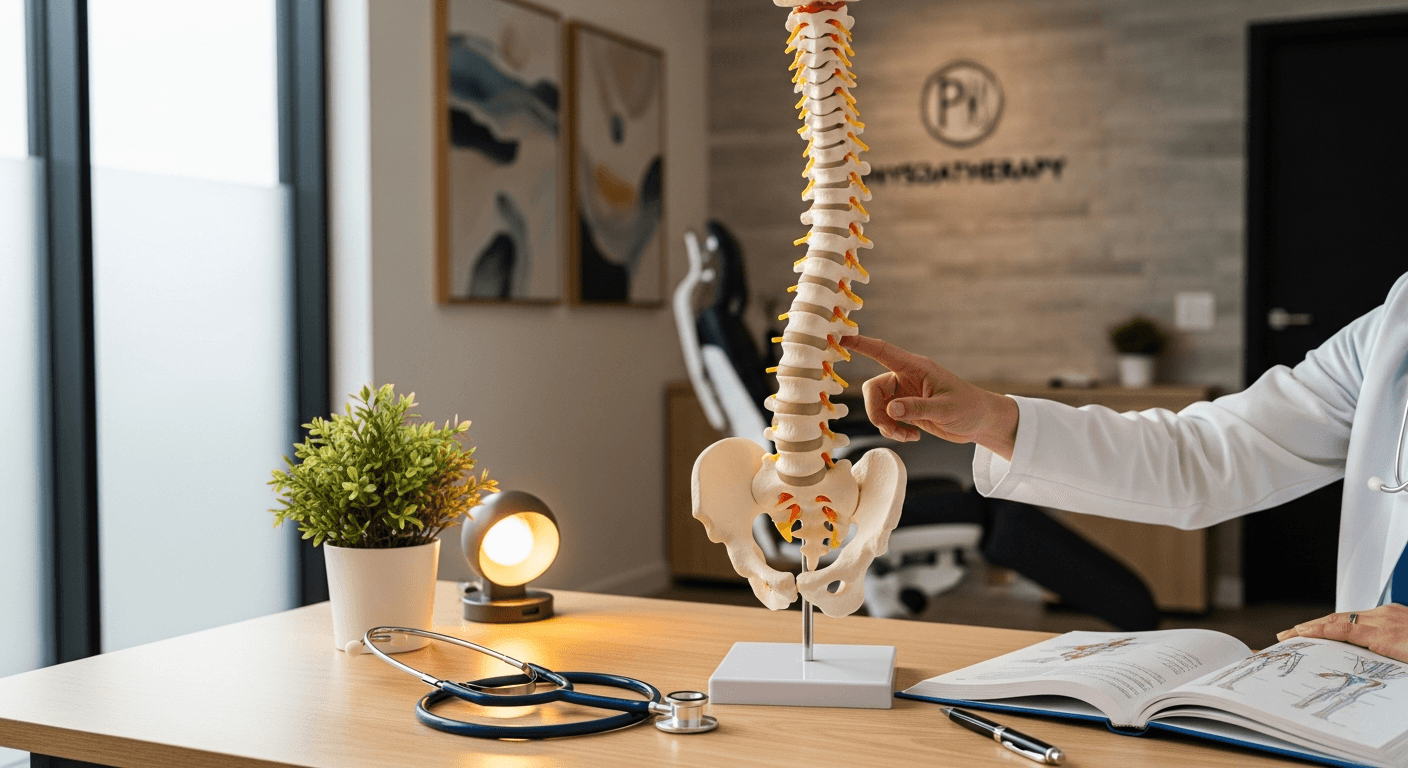
What is a herniated disc?
A herniated disc occurs when the nucleus pulposus of the intervertebral disc displaces through a fissure in the annulus fibrosus that contains it. This herniated material can compress the adjacent nerve roots, causing radiating pain and other neurological symptoms.
The intervertebral discs act as shock absorbers between the vertebrae. Over time, natural wear and tear, overloading and poor posture can weaken the annulus fibrosus, facilitating the appearance of bulges and herniations. The most common locations are the lumbar spine (L4-L5 and L5-S1) and the cervical spine.
Symptoms of a herniated disc
Symptoms vary depending on the location and degree of nerve compression. It is important to know that many herniated discs are asymptomatic, meaning they can be found on MRI scans of people without pain. The most common symptoms when the hernia is symptomatic are:
- Severe pain in the lumbar or cervical area that may radiate to the leg (sciatica) or arm (cervicobrachialgia)
- Tingling, numbness or other sensory changes along the path of the affected nerve
- Muscle weakness in the affected limb
- Pain that worsens when sitting, coughing, sneezing or straining
- Stiffness and limited spinal mobility
Does a herniated disc always need surgery?
No. The vast majority of herniated discs (over 90%) can be treated conservatively without the need for surgery. Studies show that in many cases the herniated material is partially or fully reabsorbed over time, and that conservative treatment achieves results comparable to surgery in the medium term.
Surgery is only considered when there is progressive neurological deficit (worsening muscle weakness), cauda equina syndrome (a medical emergency) or intractable pain that does not respond to adequate conservative treatment for at least 6-8 weeks. At Fontanet Medicina i Fisioterapia we work in coordination with orthopaedic surgeons to provide a comprehensive approach.
Conservative treatment with physiotherapy
Conservative treatment of herniated discs at our centre in Tarragona combines different therapeutic strategies tailored to each patient and each phase of the injury.
In the acute phase, the goal is to control pain and inflammation. We use gentle manual therapy, spinal traction, neuromodulation and deloading positions that relieve pressure on the disc and nerve.
Once pain is under control, we progress to lumbar stabilisation exercises (core stability), the McKenzie method to centralise symptoms, and neurodynamic exercises that mobilise the affected nerve and reduce its sensitisation. Progressive strengthening is key to protecting the spine in the long term.
- Manual therapy: gentle mobilisations and spinal traction
- McKenzie method: directional exercises to centralise symptoms
- Core stabilisation and strengthening exercises
- Neurodynamics: mobilisation of the peripheral nervous system
- Education in pain management and self-care
- Analgesic electrotherapy in acute phases
Prognosis and recommendations
The prognosis for a herniated disc with conservative treatment is generally good. Most patients experience significant improvement within 6-12 weeks. It is essential to maintain an active attitude, not be overcome by fear of movement and follow the recommended exercise guidelines.
At our centre, we support you throughout the recovery process, adapting treatment according to your progress and teaching you to manage your condition independently to prevent future relapses.