
Carpal Tunnel Syndrome: Symptoms and Non-Surgical Treatment
Carpal tunnel syndrome causes tingling and pain in the hand. Discover the symptoms, risk factors and conservative treatments.
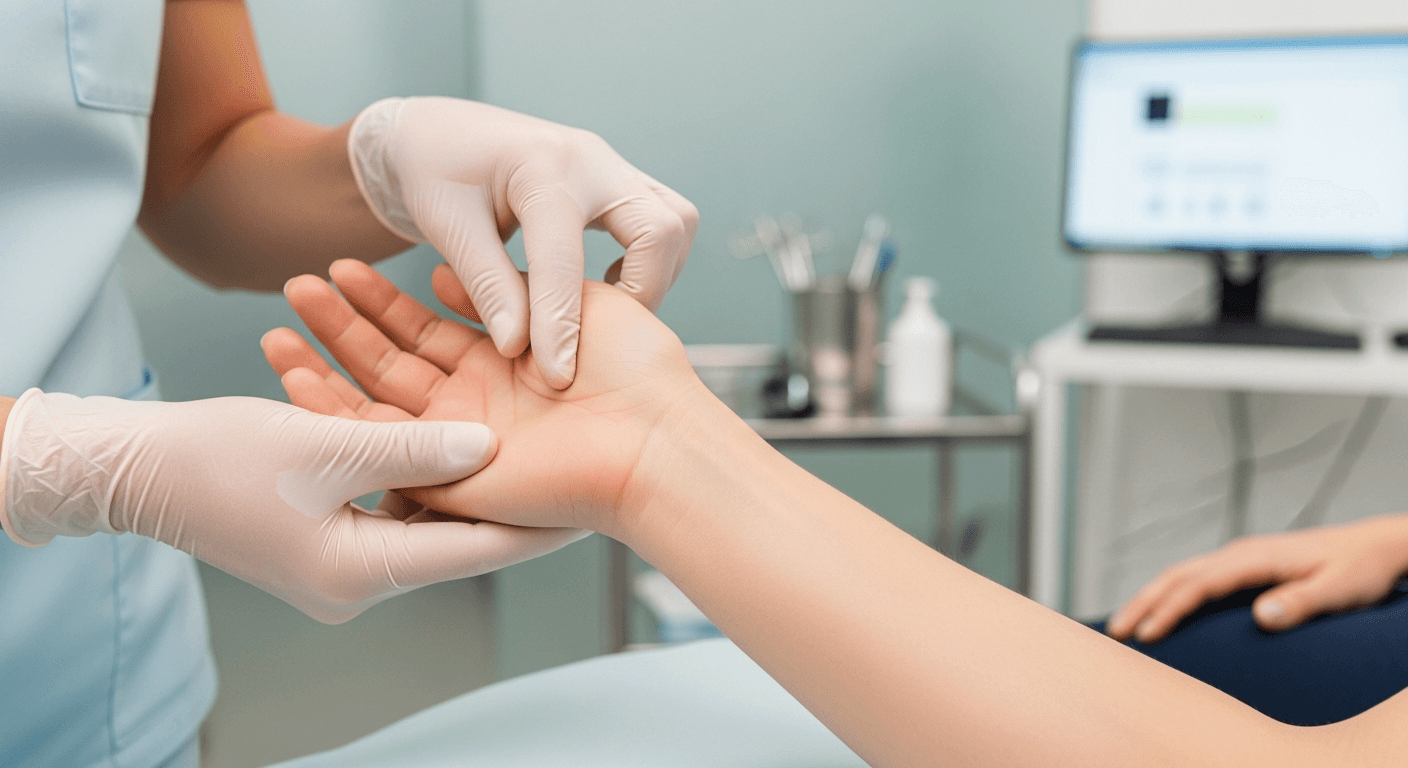
What is carpal tunnel syndrome?
Carpal tunnel syndrome (CTS) is a neuropathy caused by entrapment of the median nerve as it passes through the carpal canal in the wrist. The carpal tunnel is a narrow space formed by the carpal bones and the transverse carpal ligament, through which the median nerve and the flexor tendons of the fingers pass.
When this space is reduced due to inflammation, oedema or thickening of the structures passing through it, the median nerve becomes compressed, producing the characteristic symptoms. It is more common in women (3:1) and usually appears between the ages of 40 and 60.
Symptoms of carpal tunnel
The symptoms of CTS have a very characteristic pattern that helps guide diagnosis:
- Tingling and numbness in the thumb, index finger, middle finger and half of the ring finger (median nerve territory)
- Symptoms that worsen at night, waking the patient, and improve by shaking the hand
- Weakness in gripping objects and manual clumsiness (dropping things)
- Pain that may radiate to the forearm and even the shoulder
- Loss of sensation in the fingertips in advanced stages
- Atrophy of the thenar muscles (base of the thumb) in severe cases
Risk factors
Various factors can predispose to the development of carpal tunnel syndrome. Working with vibrating tools, repetitive wrist movements (mouse use, cashiers, hairdressers) and sustained wrist flexion are common occupational factors.
Medical conditions that cause fluid retention such as pregnancy, hypothyroidism, diabetes and rheumatoid arthritis also increase the risk. Previous wrist fractures and anatomical variants of the carpal canal are other predisposing factors.
In today's society, the intensive use of computers and mobile devices contributes to the increase of this condition, especially when the working posture is not ergonomic.
Conservative treatment with physiotherapy
Conservative treatment is the first option in mild and moderate cases of carpal tunnel. At Fontanet Medicina i Fisioterapia we have specific techniques to address this condition without surgery.
Median nerve neurodynamics is a key technique that involves mobilising the nerve along its path to reduce adhesions and improve its gliding within the carpal tunnel. Manual therapy includes mobilisation of the carpal bones to widen the canal space and tendon gliding techniques.
A night splint in a neutral wrist position is essential to prevent compression during sleep. Anti-inflammatory electrotherapy and ultrasound can reduce the oedema that compresses the nerve.
- Median nerve neurodynamics (neural mobilisation)
- Carpal bone mobilisation
- Tendon and nerve gliding exercises
- Night splint in neutral position
- Workstation ergonomics
- Specific strengthening and stretching exercises
When is surgery needed?
Surgery is considered when conservative treatment does not produce improvement after 3-6 months, when there is evident thenar muscle atrophy, or when electromyography studies show severe nerve involvement. The procedure involves cutting the transverse carpal ligament to release the nerve.
However, many patients respond well to conservative treatment, especially if started early. At our centre in Tarragona, we assess each case individually to recommend the best therapeutic option and, if surgery is necessary, we provide post-operative rehabilitation.